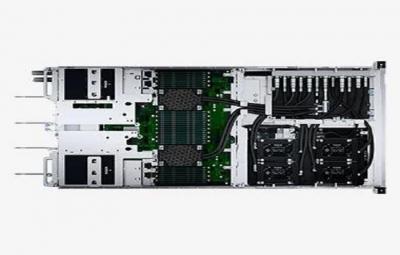
As modern data centers continue to scale rapidly, traditional air-based infrastructure struggles to keep pace with rising heat loads and energy demands. This shift has accelerated the adoption of liquid cooling systems, which are proving to be more efficient, sustainable, and performance-driven than conventional methods. Businesses seeking reliable thermal management are now exploring next-generation technologies that can support high-density computing environments without overheating risks.
One of the most transformative innovations in this space is direct liquid cooling servers, which bring coolant directly to heat-generating components like CPUs and GPUs. Unlike air-cooling systems, which rely on ambient airflow, these systems remove heat at the source, dramatically improving thermal efficiency. As workloads become more AI- and HPC-intensive, the demand for direct liquid cooling servers continues to rise across enterprise and hyperscale deployments.
At the core of this evolution are liquid loop cooling systems, engineered to circulate coolant in a closed-loop design that maximizes heat transfer while minimizing energy waste. These systems allow data centers to maintain stable operating temperatures even under extreme computational loads. The result is improved hardware longevity, reduced downtime, and significantly lower cooling costs compared to legacy infrastructure.
Organizations are increasingly investing in advanced server cooling solutions to future-proof their IT environments. These solutions are not only about temperature control, they also contribute to sustainability goals by reducing reliance on high-energy air conditioning systems. As energy efficiency becomes a global priority, liquid-based thermal management is emerging as a critical component of modern infrastructure strategy.
Another advantage of modern liquid cooling systems is their ability to reduce operational noise and improve overall environmental conditions within data centers. By minimizing the need for large fan arrays, facilities become quieter, more compact, and easier to maintain. This contributes to a more controlled and efficient computing ecosystem that aligns with next-generation IT requirements.
As industries continue to evolve toward higher computing densities and greener operations, liquid-based technologies are poised to replace outdated air-cooling models and set a new standard for performance and efficiency.